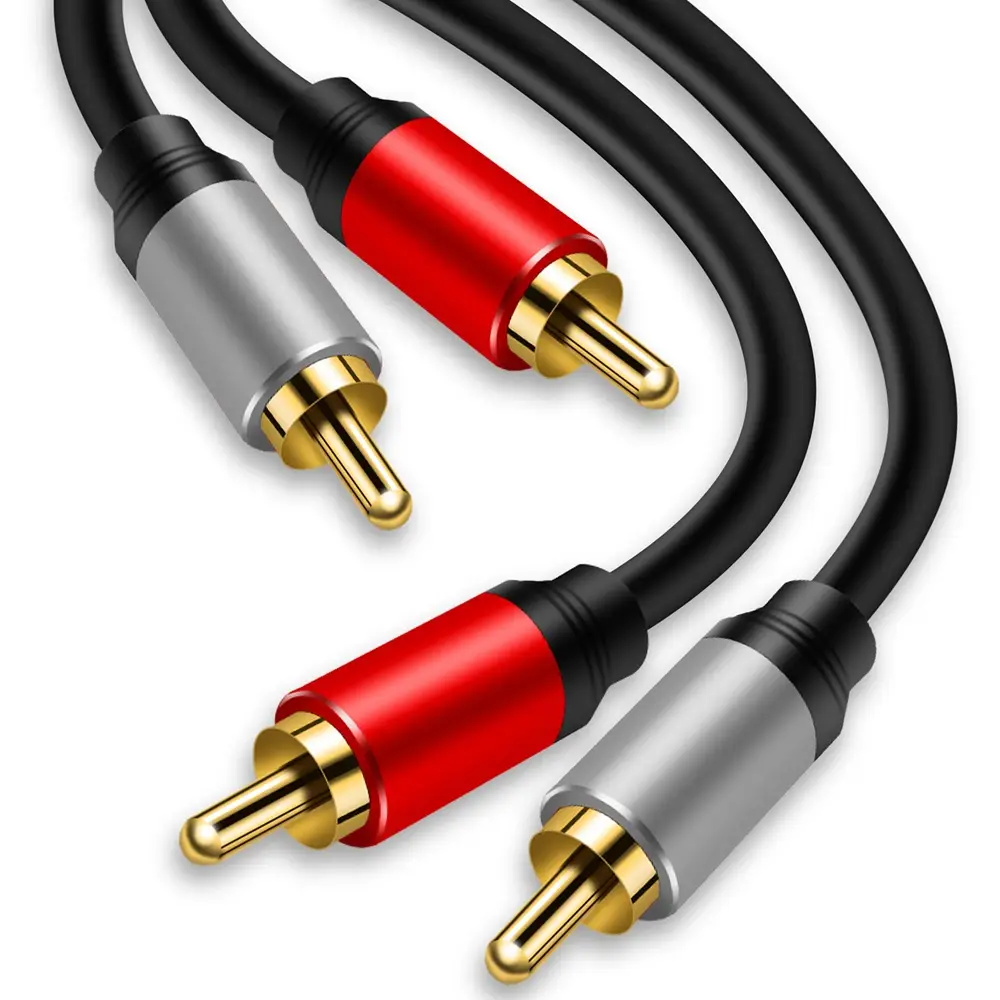
The RCA cable is a classic and dependable solution for connecting audio and video equipment. Designed for analog signal transmission, RCA cables are commonly used to link stereos, home theater systems, DVD players, TVs, soundbars, and amplifiers. With color-coded connectors for simple setup, RCA cables make it easy to achieve high-quality sound and clear signal transfer without interference. Durable construction ensures long-lasting performance, making them a trusted choice for both casual listeners and audio enthusiasts.
Types of RCA Cables & Their Differences
- RCA to 3.5mm Stereo to Dual RCA (Male & Female)
- This cable allows you to connect devices with a 3.5mm headphone jack (like phones, laptops, or portable players) to audio equipment that uses RCA inputs (such as speakers, mixers, or stereos).
- The male version has two RCA plugs (red and white) and a single 3.5mm plug, letting you directly connect a device to a stereo input.
- The female version has RCA jacks instead of plugs, allowing you to connect using additional RCA cables if needed.
- Essentially, these are used for bridging 3.5mm devices with RCA-based equipment.
- RCA to RCA
- This is a direct connection where both ends of the cable have RCA plugs.
- Commonly used for connecting two pieces of traditional audio/video equipment, like linking a DVD player to a TV, or a turntable to an amplifier.
- It does not involve a 3.5mm connector, so it’s best for setups where both devices already use RCA ports.
Key Difference in Use:
- RCA to 3.5mm = Connects modern devices with headphone jacks to older RCA-based systems.
- RCA to RCA = Connects two RCA-equipped devices directly.