
Is a Hearing Aid Demonstration Worth It? An Audiologist’s Honest Answer
By Kim Fishman, Audiologist | Hears Hearing & Hearables | Hears to U Clinic, Hopkins, Minnesota
At Hears Hearing & Hearables, we’ve been conducting hearing aid demonstrations for many years, both in our Hopkins, Minnesota clinic and remotely for online customers across the country. In that time, we’ve worked with hundreds of people at every stage of the hearing aid journey: first-time buyers trying to understand what’s possible, experienced users who think they already know what they want, and everyone in between.
What we’ve learned is that a demonstration is rarely just about the devices. It’s about what you discover when you actually wear something in your ears, in real time, with a professional guiding the experience. It’s about learning what you didn’t know you were missing.
But we also hear the skepticism. Is a demo really necessary? Is it worth the cost? Can’t I just read reviews online and pick the best-rated one? This post answers those questions honestly, including the parts that don’t always get said out loud.
Why Hearing Aid Preferences Are More Personal Than You’d Expect
Every person who comes to us for a demonstration brings something different. Some want to understand speech better in a busy restaurant. Others want to hear the subtle sounds they’ve been missing: birds, music, and grandchildren’s voices. Many people want to reconnect with the people they love without asking them to repeat themselves.
Here’s what we’ve also noticed: the longer someone has used hearing aids, the more specific and useful their preferences become. They know what worked before. They know what bothered them. That history makes the demo more efficient and more targeted.
But for first-time buyers, there’s a different challenge. Their preferences are often shaped by things that have nothing to do with their actual hearing needs, a friend’s recommendation, a brand they recognize, or the lowest price they found online. Those influences are completely understandable. They’re also not always the best guide to finding the right device.
Why Online Sound Comparisons Can’t Replace a Real Demo
Some websites let you listen to audio samples comparing different hearing aids. We understand the appeal; it seems like an efficient way to narrow your choices from home.
The problem is that those samples cannot replicate what a hearing aid actually sounds like in your ear. Sound quality changes based on:
- How the device fits your specific ear canal
- The size and type of dome or ear tip used
- The style of receiver (standard, power, or custom)
- How the device is programmed to your audiogram
- The acoustic characteristics of your own hearing loss pattern
The same hearing aid can sound completely different in two different ears. A demo is the only way to know what it actually sounds like in yours.
A professional fitting accounts for all of these variables. An online sound sample accounts for none of them. That’s not a knock on those resources; they have value as a starting point. But they cannot be your ending point.
What a Hearing Aid Demonstration Is and What It Isn’t
We want to be transparent about this because we’ve seen confusion cause frustration on both sides.
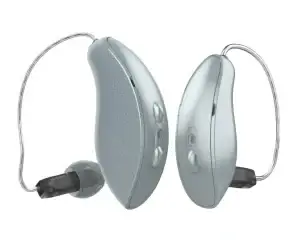
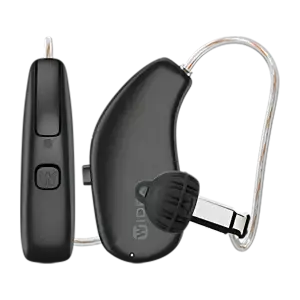
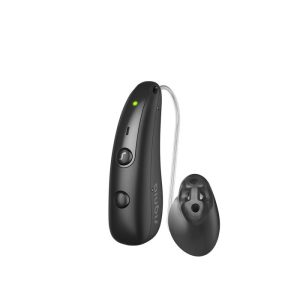
A demonstration is an opportunity to compare prescription hearing aids and understand what works for you. Demo devices are carefully selected and fitted for comparison purposes by a qualified professional. They are not programmed to full “best practice” settings; that level of precision happens after you’ve chosen a device and committed to a full fitting.
Important: Hearing aid demonstrations at Hears Hearing & Hearables are for prescription hearing aids only. If you’re exploring over-the-counter (OTC) hearing aids, the 45-day return window available on OTC purchases serves as your real-world trial. See our companion post for details.
What a demo does provide, even in comparison mode, is meaningful. Over the course of a fitting, a skilled professional learns how to fine-tune the device to make it sound better for you. That process, of listening, adjusting, and listening again, is part of what makes professional guidance so valuable. It can’t be replicated by wearing a device straight out of a box.
Why a Hearing Aid Demo Is Worth More Than Its Price Tag
We occasionally hear people question the cost of a demo, sometimes because they view it as a small, quick task. We want to explain why that perception underestimates what’s actually happening.
Here’s what a professional hearing aid demonstration actually involves:
- Reviewing your hearing profile and selecting appropriate devices for your specific audiogram
- Physically fitting the devices with the correct dome size, receiver type, and insertion depth for your ear
- Making real-time adjustments to help you hear the differences between devices meaningfully
- Guiding you to identify what you’re actually hearing, which differences matter, and which don’t
- Drawing on years of clinical experience with hundreds of patients to interpret your reactions and refine the fitting
That process takes professional training, time, and skill. The fee reflects the expertise involved, not the duration. See our current demo pricing here.
Three Things a Demonstration Does That Nothing Else Can
1. Rules Out the Wrong Device Before You Invest
A poor match between your hearing needs and your hearing aid technology is one of the most common reasons hearing aids end up in a drawer. It’s not that the device failed; it’s that it was never the right fit for that person’s hearing profile and lifestyle. A demo can identify that mismatch before you’ve spent thousands of dollars.
2. Shows You What You Didn’t Know Was Possible
Many people come to their first demo with fixed assumptions about what hearing aids can do, usually based on what they’ve heard from friends or seen in marketing. The reality is often significantly better than what they expected. Features like directional microphones, automatic environment detection, and AI-driven noise reduction aren’t abstract specs on a page. When you hear them working in real time, they become real. You may discover that what you thought was “good enough” is actually significantly less than what’s available to you.
3. Gives You Knowledge That Protects Your Investment
A week’s demonstration can save you from weeks or years of dissatisfaction with the wrong product. More than that, it gives you a frame of reference. When you eventually choose a device and wear it in your daily life, you’ll know what to listen for, what’s adjustable, and when to ask for help. That knowledge has lasting value that goes well beyond the demo itself.
Remote Demos vs. In-Person at Our Hopkins Clinic: What to Expect
At Hears Hearing & Hearables, demos are available in two formats, and we want to be honest about how each works, including where the differences matter.
In-Person Demo at Our Hears to U Clinic in Hopkins, Minnesota, or any other provider we may find that offers demos. (note: We have not found a partner to offer this service yet.)
For patients who can visit us in Hopkins, the in-person demo is the most comprehensive option. We can look in your ears, fit multiple devices with the right domes and receivers, and make real-time adjustments in a controlled clinical environment. The feedback loop between what you’re hearing and what we can adjust is immediate and precise. If you’re in the Minneapolis area, this is the experience we’d recommend.
Remote Demo for Online Customers
For customers across the country who shop with us at Hears Hearing & Hearables online, we offer remote demonstrations guided by our professional team via telehealth. We want to be honest about what makes a remote demo successful, and where it has limitations.
Remote demos work best for patients who:
- Are comfortable with technology and can manage device setup with remote guidance
- Have realistic expectations, understanding that remote fitting has variables that an in-clinic fitting can control more precisely
- Are committed to following the process carefully, including wearing the devices in the environments where they struggle most
- Understand and respect the professional time and expertise involved
We’ve had genuinely successful remote demos with patients who approached the process with that mindset. We’ve also encountered situations where remote guidance wasn’t the right fit; patients who struggled with the technology, had difficulty with insertion, or encountered device issues (hard to understand how to clean the wax out of the dome) that created complications better handled in person.
Being transparent about this helps both of us. If you’re considering a remote demo, reach out first, and we’ll have an honest conversation about whether it’s the right path for your situation.
Is a Hearing Aid Demo Right for You?
A demonstration is likely the right next step if:
- You’ve never worn hearing aids and want to understand what’s actually possible before committing to a purchase
- You’ve worn hearing aids before but weren’t satisfied, and want to compare what’s changed
- You’re choosing between two or more technology levels and want to hear the actual difference before deciding
- You want to make a decision based on real-world sound rather than marketing claims, friend recommendations, or spec sheets
- You’re considering prescription hearing aids and want professional guidance through the decision process
A demo is probably not necessary if:
- You’re specifically looking for OTC hearing aids; the 45-day return window gives you a real-world trial built into the purchase.
- You’re an experienced hearing aid user replacing a device with the same model or the same brand’s newer version
- You’ve already completed a professional evaluation and have a clear recommendation to follow
Moving Forward: What We Ask of Demo Participants
Whether you come to us in Hopkins or connect with us remotely, we ask the same thing of everyone who participates in a demonstration: approach it as a learning opportunity, not a transaction.
A demo is not “trying something on” in the way you might try on a jacket. It’s an active, educational process that requires your engagement, your honest feedback, your attention to what you’re hearing and what feels different, and your respect for the professional time and expertise being invested in helping you find the right solution.
We don’t pressure anyone toward a particular brand or price point. Our goal is the same as yours: finding what actually works for your hearing. But that process works best when both sides are committed to it.
Not sure if a demo is right for you? Start with our free Hearing Handicap Screening Test to better understand your hearing profile. Then reach out, and we’ll help you figure out the best next step.
Ready to Experience the Difference?
We offer hearing aid demonstrations both online through Hears Hearing & Hearables and in person at our Hears to U clinic in Hopkins, Minnesota. If you’re ready to learn what modern prescription hearing technology can do for your specific hearing, and to make a decision based on real sound rather than guesswork, we’d love to guide you through it.
- Book an in-person demo at Hears to U clinic in Hopkins, MN, that is, if you live in Minnesota!
- Schedule a remote demo consultation online.
- Not sure which path is right for you? Read our full guide to hearing aid trial options.
- Contact our team for a conversation before you commit.
If you are open to learning, willing to explore, and ready to invest in finding the right fit, we are here to guide you through that process.
— Kim Fishman, Audiologist | Hears Hearing & Hearables | Hears to U, Hopkins, Minnesota
Frequently Asked Questions: Hearing Aid Demonstrations
What is a hearing aid demonstration?
A hearing aid demonstration is a professional guided experience in which you wear and compare prescription hearing aids to understand what works best for your specific hearing profile, lifestyle, and preferences. Demo devices are selected and fitted by a qualified hearing care professional and adjusted for comparison purposes, not full best-practice programming, which occurs after device selection and purchase.
Are hearing aid demos available online or only in person?
Hears Hearing & Hearables offers hearing aid demonstrations both in person at our Hears to U clinic in Hopkins, Minnesota, and remotely for online customers nationwide via telehealth. Remote demos work best for patients who are comfortable with technology, have realistic expectations, and are committed to following professional guidance through the process. Contact us to discuss which format is right for your situation.
How much does a hearing aid demonstration cost?
Our current demo pricing is available on our demo product. The fee reflects the professional expertise, time, and skill involved, including device selection, fitting, real-time adjustments, and guided evaluation. A demo can save you from a significantly more costly mistake by helping you choose the right device before you commit.
Are hearing aid demos available for OTC hearing aids?
No. Our demonstration program is for prescription hearing aids only. For over-the-counter (OTC) hearing aids, Minnesota law provides a 45-day return window, which serves as a real-world trial built into the purchase. See our Try Before You Buy guide for details on all trial options available.
What’s the difference between a demo and a full hearing aid fitting?
A demo allows you to compare devices and understand what’s possible, with devices set for comparison rather than full prescription settings. A full fitting occurs after you’ve selected a device and committed to purchase. At that point, the hearing aid is programmed precisely to your audiogram using best-practice protocols, including real-ear measurement, which verifies that the device is delivering exactly the right amplification at your eardrum.
What if I’m not near the Hopkins, Minnesota clinic?
We serve customers nationwide through Hears Hearing & Hearables online. For prescription hearing aid demonstrations, we offer remote consultations via telehealth. We’ll have an honest conversation with you about whether a remote demo is the right fit for your situation before we proceed. Contact us to start that conversation.
How do I know if a hearing aid demo is worth it for me?
A demo is most valuable if you’ve never worn hearing aids and want to understand what’s possible, if you’ve been dissatisfied with previous devices, or if you’re choosing between technology levels and want to hear the actual difference before deciding. If you’re considering OTC hearing aids, a demo isn’t necessary; the 45-day return window gives you a real-world trial instead. Take our free Hearing Handicap Screening Test as a first step, and then reach out. We’ll help you figure out the right path.