Why Hearing Aid Fitting Standards Exist and What They Mean for Your Hearing Care
By Kim Fishman, Audiologist | Hears Hearing & Hearables | Hears to U Clinic, Hopkins, Minnesota
Most people shopping for hearing aids focus on the device, the brand, the features, and the price. That’s understandable. But the research on hearing aid outcomes tells a different story about what actually determines whether a hearing aid changes someone’s life or ends up in a drawer.
It’s not all the brand. It’s not all about the technology level. It’s also very much about the fitting. The audiology profession recognized this clearly enough that a formal, evidence-based standard of practice now exists specifically for hearing aid fitting, published by the Audiology Practice Standards Organization (APSO), a Minnesota-based non-profit professional organization. That standard matters for every person considering prescription hearing aids, and this post explains why.
Who Is APSO and Why a Minnesota Connection Matters
The Audiology Practice Standards Organization is a non-profit professional organization dedicated to developing and maintaining evidence-based practice standards for audiologists. Founded in 2017 and headquartered in New Brighton, Minnesota, APSO develops standards through panels of recognized subject matter experts, with review and comment open to all practicing audiologists in the United States.
Their standards represent accepted best practices for the profession, grounded in peer-reviewed research, developed by leading clinical experts, and freely accessible to the public at audiologystandards.org. They are not guidelines or suggestions. They are formal standards describing what audiologists should do to ensure successful hearing aid outcomes.
APSO Standard S2.1: Hearing Aid Fitting for Adult and Geriatric Patients covers candidacy, selection, fitting, verification, and follow-up for adult patients receiving hearing aids from audiologists. It outlines 15 basic services that should be included in every professional hearing aid fitting. It is freely available at audiologystandards.org.
The Most Important Thing Anyone Has Said About Hearing Aids, and Why It’s Still True
When APSO published their hearing aid fitting standard, their president, Dr. Patricia Gaffney, Professor of Audiology at Nova Southeastern University, described the clinical reality that the standard is designed to address:
“Hearing loss is more than just poorly functioning ears. Your brain goes through significant changes when you have prolonged hearing loss. To address those changes, you need more than just amplification. A primary role of the audiologist is to develop a plan of care that helps the hearing centers in your brain rehabilitate, aided by the hearing device. Without an audiologist guiding a patient, hearing aids often end up in someone’s drawer because the rehabilitation process is not allowed to finish.” Dr. Patricia Gaffney, APSO President, Professor of Audiology, Nova Southeastern University
That last sentence, hearing aids end up in a drawer because the rehabilitation process is not allowed to finish, is the most clinically honest thing in this entire post. And the research backs it up. Studies consistently show that a meaningful percentage of hearing aid owners don’t regularly wear their devices. The most common reasons are not device failure. They are inadequately fitting, insufficient orientation to how the device works, unrealistic expectations that weren’t managed during the fitting process, and a lack of follow-up support when the adjustment period became difficult.
A properly fitted hearing aid, with professional guidance through the adjustment process, produces a very different outcome. That is what the APSO standard is designed to ensure.
What APSO Standard S2.1 Actually Requires
The standard outlines 15 services that should be part of every professional hearing aid fitting for adult patients. Without getting into clinical technical detail, the key elements fall into five categories:
1. Candidacy and Assessment
Before any device is selected, the audiologist conducts a comprehensive assessment, not just a hearing test, but an evaluation of communication needs, lifestyle, motivation, and expectations. Who the patient is matters as much as what their audiogram shows. The standard requires that candidacy be established before device selection, not after.
2. Device Selection
Selection is based on the audiogram and the patient’s individual needs, preferences, and lifestyle, not on what the clinic has in stock or what carries the highest margin. The standard requires that the audiologist counsel the patient on options and involve them in the selection process.
3. Fitting and Verification
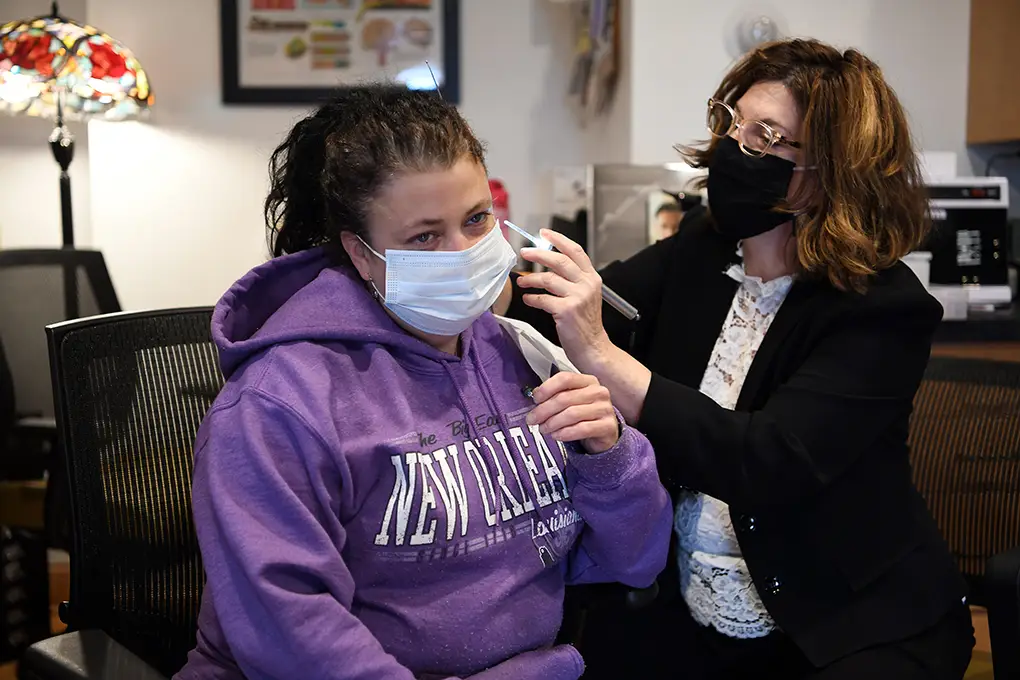
This is where real-ear measurement (REM) becomes non-negotiable under best-practice standards. The hearing aid must be verified, using objective measurement at the eardrum, to confirm it’s delivering the right amplification for that patient’s specific ear anatomy. Fitting to targets on a screen is not the same as confirming what’s actually reaching the eardrum.
At our Hears to U clinic in Hopkins, real-ear measurement is a standard part of every prescription fitting. It cannot be performed remotely which is why, as we discuss in our online buying guide, the initial fitting is something we strongly recommend doing in person when possible.
4. Orientation
APSO Standard 12 specifically addresses orientation, teaching the patient how to use, care for, and maintain their hearing aids. This step is frequently abbreviated in high-volume fitting environments. The standard requires it to be both device-centered (how this specific device works) and patient-centered (how this person’s lifestyle and needs should shape how they use it).
5. Follow-Up and Outcomes Measurement
The fitting does not end when the patient leaves the clinic. The standard requires follow-up care and measurement of outcomes, confirming the patient is achieving the communication benefit the device was intended to provide. This is the step most often skipped in transaction-based hearing aid sales, and it’s the step most directly connected to whether hearing aids get worn or end up in a drawer.
Why This Matters If You’re Buying Prescription Hearing Aids Online
Online purchasing of prescription hearing aids is legitimate and increasingly common, including through our store at Hears Hearing & Hearables. But the APSO standard is worth understanding as a buyer because it tells you what questions to ask of any provider, online or in person.
The questions APSO’s standard answers for you:
- Does the provider require your audiogram? If not, they cannot program the device to your hearing profile and cannot meet the standard.
- Does the provider offer real-ear measurement verification? For online buyers, this is the strongest argument for an in-person initial fitting if at all possible. REM cannot be performed remotely.
- Does the provider include device orientation? Not just a manual in the box, but actual guidance on how to use the device for your specific situation.
- Is follow-up care built into the process? Adjustments, telehealth check-ins, and troubleshooting support these are what the standard describes as essential, and what separates a professional provider from a shipping-only retailer.
At Hears Hearing & Hearables, our fitting process is built around these standards, whether care is delivered in person at our Hears to U clinic or remotely through our telehealth service. We follow the standard because it produces better outcomes, not because we’re required to.
Hearing Aids and the Brain. Why Fitting Is Only the Beginning
Dr. Gaffney’s point about the brain deserves its own attention. Prolonged hearing loss doesn’t just reduce what you hear; it changes how your brain processes sound. The auditory cortex, deprived of input over time, undergoes reorganization. The neural pathways associated with speech understanding can weaken with disuse.
Hearing aids restore acoustic input, but the brain needs time to adjust to processing sound it hasn’t been receiving clearly. This is the acclimatization process. It is why new hearing aid users often find the first weeks of wearing aids exhausting or overwhelming, sounds that haven’t been audible for years suddenly are again, and the brain is working hard to relearn how to process them.
Professional guidance through this process, managing expectations, adjusting amplification gradually, and counseling on what to expect, is what the APSO standard’s follow-up and outcomes requirements are designed to support. Without it, patients often give up during the adjustment period and conclude the hearing aids don’t work, when in fact the devices are fine, and what was missing was the support structure around them.
For a deeper look at what the research says about hearing loss and brain health, see our post on hearing loss and cognitive function.
Our Commitment to These Standards: In Clinic and Online
At Hears to U clinic in Hopkins, we have followed these standards of practice for years, before APSO formalized them, and since. Every patient receives a comprehensive assessment, participates in device selection, is fitted using real-ear measurement verification, receives thorough orientation, and has access to follow-up care.
For our online customers at Hears Hearing & Hearables, we apply the same principles through our telehealth service. We cannot perform real-ear measurement remotely, which is why we’re honest about recommending in-person fitting for new hearing aid users when possible, and why our provider network exists to connect patients with qualified local professionals when they’re not in Minnesota.
What we can do remotely, and do well, is provide professional consultation before purchase, program devices to your audiogram, offer structured follow-up through telehealth, and guide you through the acclimatization process that the APSO standard describes as essential to success.
The standard exists because the profession recognized what our patients have always told us: it’s not just the hearing aid. It’s everything around it.
Ready to Experience Hearing Aid Fitting Done Right?
Whether you’re in Minnesota and can visit our Hears to U clinic in Hopkins, or you’re anywhere in the country and want professional-grade online care, our team is here to guide you through the process the right way.
— Kim Fishman, Audiologist | Hears Hearing & Hearables | Hears to U, Hopkins, Minnesota
Frequently Asked Questions: Hearing Aid Fitting Standards
What is APSO and what do they do?
The Audiology Practice Standards Organization (APSO) is a non-profit professional organization headquartered in New Brighton, Minnesota, dedicated to developing evidence-based practice standards for audiologists. Their standards are developed by panels of recognized experts, reviewed by practicing audiologists, and freely available to the public at audiologystandards.org. APSO Standard S2.1 specifically addresses hearing aid fitting for adult and geriatric patients.
What does the APSO hearing aid fitting standard require?
APSO Standard S2.1 outlines 15 services that should be included in a professional hearing aid fitting: comprehensive candidacy assessment, individualized device selection, fitting with objective verification (including real-ear measurement), device-centered and patient-centered orientation, follow-up care, and outcomes measurement. The standard is designed to ensure that hearing aid fittings produce the communication benefits they are intended to provide.
What is real-ear measurement and is it required?
Real-ear measurement (REM) is an objective verification step where a tiny probe microphone placed in the ear canal confirms the hearing aid is delivering the correct amplification for that patient’s specific ear anatomy. It is considered best practice under APSO standards and by the American Academy of Audiology. Not every provider performs REM, but it significantly improves fitting accuracy and outcomes. At our Hears to U clinic in Hopkins, it is standard in every prescription fitting.
Why do so many hearing aids end up not being worn?
Research consistently identifies inadequate fitting, insufficient orientation, unmanaged expectations, and lack of follow-up support as the primary reasons hearing aids are abandoned, not device failure. APSO’s standard was developed specifically to address this: by requiring comprehensive assessment, verification, orientation, and follow-up, it creates the professional support structure that helps patients successfully adapt to their hearing aids through the adjustment period.
Can I get a properly fitted hearing aid online?
Many elements of a professional fitting can be performed remotely through telehealth, including consultation, audiogram-based programming, device orientation, and follow-up adjustments. Real-ear measurement cannot be performed remotely and is best done in person. At Hears Hearing & Hearables, we offer professional fitting support through our telehealth service nationwide, and in-person fitting at our Hears to U clinic in Hopkins, Minnesota.
What questions should I ask a hearing aid provider?
Based on APSO’s standards, the key questions are: Do you require my audiogram before programming? Do you perform real-ear measurement verification? What does your fitting appointment include? What follow-up care is included after I receive my devices? Is telehealth follow-up available? A provider who can’t clearly answer these questions may not be following best-practice standards.