
Why a Second Opinion on Hearing Aids Can Change Everything: The Story of Professor C.
This is a true story. The names have been kept intentionally vague to protect the privacy of the people involved. But the details, the friendship, the frustration, the solution, and the outcome are all real. We share it because it illustrates something that happens far more often than it should, and that most people never know to look for.
It starts, as many good things do, with my dad.
Phillip, My Dad
My dad Phillip is a man in his eighties who is still working, still meeting people, still curious, and still fully engaged with the world. He has lived a life of integrity and genuine care for others. He loves my mom. He watches Gophers football. He keeps connected.
A few months ago (years ago now, as this post has been updated), he came home from a conference and was excited about accidentally meeting a man who was not at the conference but happened to be nearby, reading a book. They became fast friends. Within days, my dad told me about this man, whom I will call Professor C, with obvious enthusiasm. Professor C was quite a character, a professor with a sharp mind, a sense of humor, and strong ideas about education and teaching. My dad was inspired in the way you get inspired when you meet someone who genuinely energizes you.
Then my dad mentioned something in passing: his own hearing aid had stopped working halfway through the conference, and he had struggled. And from there, almost as an afterthought, he said that Professor C seemed to have trouble hearing too. He asked if I could help his new friend.
Meeting Professor C
I reached out to Professor C, and we connected easily. He was interesting, warm, and clearly frustrated by his hearing situation in a way that had built up over a long time.
The picture that emerged was this: Professor C had been fitted with prescription hearing aids by his audiologist. He had gone back to that audiologist a dozen or more times over the course of getting the new devices and during his subsequent travels, and he still was not hearing well. He felt he could no longer process speech properly. He had begun to wonder whether the problem was neurological rather than a hearing aid issue. He was also considering getting a cochlear implant evaluation.
A cochlear implant is a surgically implanted device intended for people with severe to profound hearing loss who do not benefit adequately from hearing aids. It is a significant medical procedure with a long rehabilitation process. It was not the likely right answer for what Professor C was experiencing.
What I suspected, based on what he described, was something different: he had been pressed to keep using one specific hearing aid product that simply was not the right match for his hearing profile. I had seen this exact pattern regularly in my clinic. Patients who had been fitted with a device that was not working for them, who had been back many times without resolution, and who had been told to keep trying rather than being offered a different option.
One Different Device
Professor C sent me his audiogram, photographs of his ear molds, and a description of his specific challenges. We got on a video call. There were some early technical difficulties, as there often are the first time, but with help from a young colleague of his, we sorted it out and got to work.
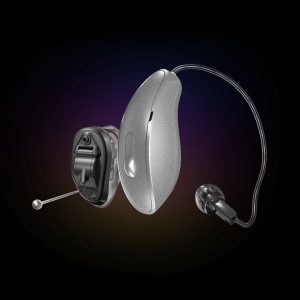
Because we have an online store and ship across the country, sending him a programmed demo device was straightforward. I programmed the hearing aid to his audiogram, packaged it up, and shipped it.
Within days of receiving the device, Professor C was hearing better. Not marginally better. Noticeably, meaningfully better. Those around him noticed immediately. He was satisfied with the first alternative device we tried, without needing to explore further options.
Did I do something extraordinary? No. I did what a hearing care professional is supposed to do: I listened, I evaluated the situation, I offered a different option when the current one was not working, and I followed up. The difference was not complicated. It was just not being constrained to one product.
What Happened With His Original Audiologist
Professor C had used his insurance benefit on the hearing aid that was not working for him. That created a real problem: he could not easily return it, and he now had a device that was sitting largely unused while he was using the demo unit I had sent.
I wrote an email to his original audiologist, as gently as I could, describing what had happened and how I had come into the picture. I tried to be collegial and respectful. I was genuinely concerned, not combative. I am aware that the audiologist I wrote to is not unique. Fitting one brand to nearly every patient is something that happens regularly in clinics across the country, most often because of manufacturer relationships, TPA contracts, or simply the path of least resistance. It is not always a character flaw. It is often a systemic problem.
I never heard back from his audiologist. Professor C received a note requesting that he accept a follow-up appointment, which he did, with a different audiologist at the practice. They told him he could not return the original device.
He is hearing somewhat better now with his original product, perhaps with some adjustments made at the follow-up. He kept the demo I sent him as a backup while we made sure things were settled. I am glad he is doing better. I wish the path had been simpler.
What This Story Is Really About
This is not a story about one audiologist getting it wrong. It is a story about a system that makes it easy to get it wrong, and hard for patients to know the difference.
Professor C spent months struggling to hear clearly. He went back to his provider repeatedly. He began questioning his own cognitive function. He was on the path to considering a cochlear implant evaluation, which would have meant a surgical consultation for a problem that, at its core, was a product fit issue.
The thing that changed the outcome was simple: someone offered him a second option.
If your hearing aids are not working well for you, and you have been back to your provider multiple times without meaningful improvement, that is a signal worth taking seriously. It does not mean your audiologist is bad or your device is defective. It may mean that a different device, or a different fitting approach, or a second set of professional ears would produce a better result.
What You Can Do If You Are in This Situation
You have more options than you may realize:
Ask specifically about trying a different brand or model
If your current device is not performing the way you expected after several adjustments, it is entirely reasonable to ask your audiologist whether a different manufacturer’s platform might be worth trying. A provider who is not affiliated with a specific brand should be willing to have that conversation. A provider who cannot offer you that conversation may be constrained by a manufacturer relationship. We wrote what to look for in an independent provider.
Seek a second opinion
A second opinion from a different audiologist is a legitimate, normal thing to do in hearing healthcare, exactly as it is in any other area of medicine. You do not need to feel disloyal to your current provider. You need to hear well. Our team at Hears Hearing and Hearables is happy to review your situation, look at your audiogram, and offer a professional perspective, whether or not you ultimately purchase from us.
Consider a demo before committing to a different device
At our Hears to U clinic in Hopkins, Minnesota, we offer prescription hearing aid demonstration programs for patients who want to try a different device before committing to a purchase. This is exactly the kind of process Professor C went through remotely. If you are local, we can do this in person. If you are elsewhere, we can discuss remote options.
Know that online prescription hearing aid care is real
Professor C lives nowhere near Minnesota. The entire process, from our first video call to the programmed demo device arriving at his home, happened remotely. Prescription hearing aid telehealth works. It requires your audiogram, a Bluetooth-capable hearing aid, and a provider who takes the time to actually listen.
If you already have prescription hearing aids that are sitting in a drawer, or that you wear reluctantly because they are not quite right, reach out. We may be able to help you get more from what you already have, or help you find a better match.
A Note to Hearing Care Professionals
If you are an audiologist or hearing care professional reading this, this is for you too.
If you have a patient who has been back repeatedly and is still not hearing well, please consider offering a different product. Not every device works for every ear. Not every processing platform suits every hearing profile. The discomfort of saying ‘let us try something else’ is far smaller than the cost to the patient of continuing with something that is not working.
And if you are in a system that makes it difficult to offer alternatives, whether through a TPA contract, a manufacturer relationship, or institutional pressure, that system is the problem, not you. There are provider networks that operate differently. Our provider network at Hears Hearing and Hearables is one of them.
Finally
My dad Phillip, asked me to help his new friend because that is who he is. He saw someone struggling and thought of someone who might be able to help. He was right.
Helping Professor C was not complicated. It was not heroic. It was doing what hearing care professionals are supposed to do: listening carefully, offering options, and following through.
That is what we try to do at Hears Hearing and Hearables. And it is what every patient with hearing loss deserves from the people they trust with their care.
If you are struggling with hearing aids that are not working for you, please reach out. You may have more options than you know.
Frequently Asked Questions: Hearing Aid Second Opinions
Can I get a second opinion on my hearing aids?
Yes, absolutely. A second opinion from a different audiologist is a completely normal and appropriate step in hearing healthcare, particularly if your current devices have not been working well despite multiple adjustments. You can bring your audiogram and your current hearing aids to any audiologist for evaluation. Our team is happy to review your situation and offer a professional perspective.
What if my hearing aids are not working well after several adjustments?
If you have been back to your provider multiple times without meaningful improvement, it is worth asking specifically whether a different hearing aid brand or platform might be worth trying. Different manufacturers process sound differently, and a device that does not suit one person’s hearing profile may work excellently for another. This is not a reflection on the severity of your hearing loss; it is about finding the right match.
Can prescription hearing aid care happen remotely?
Yes. With a current audiogram, a Bluetooth-capable hearing aid, and a licensed audiologist, a significant amount of prescription hearing aid care can happen remotely. Initial programming, follow-up adjustments, and troubleshooting can all be done through your hearing aid’s companion app and a telehealth video call. We coordinate remote prescription care nationwide through our provider network.
My audiologist only offers one brand. Is that normal?
It is common but not ideal. Some audiologists are constrained by manufacturer relationships, TPA contracts, or institutional requirements that limit what brands they can offer. An independent audiologist with no manufacturer financial relationships should be able to offer multiple brands and recommend based on your specific hearing profile. If your provider cannot discuss alternatives, seeking a second opinion from an independent provider is a reasonable next step.
How do I know if I need a cochlear implant versus better-fitted hearing aids?
A cochlear implant is a surgically implanted device intended for people with severe to profound hearing loss who do not benefit adequately from well-fitted hearing aids. If you are struggling with your current hearing aids, the first step is to ensure they have been optimally programmed to your audiogram using best-practice fitting protocols, including real-ear measurement. If multiple well-fitted hearing aids from different manufacturers have been tried and you still do not achieve adequate benefit, then a cochlear implant evaluation is appropriate. If you have only tried one brand or have not had real-ear measurement verification, a second opinion before pursuing a surgical option is strongly recommended.