
Professionally Fit Hearing Aids: What You Actually Get — and Who Needs Them
Over the counter hearing aids have opened the door for millions of people to address mild to moderate hearing loss affordably and on their own terms. That’s genuinely good news. But for many people, those with more complex hearing needs, those who’ve tried OTC devices without success, or those who simply want the most precise solution available professionally fit hearing aids remain the gold standard.
So what exactly does “professionally fit” mean? What do you get that you can’t get from a self-fit device? And how do you know which path is right for you? This post answers all of it clearly and without the jargon.
If you’re just starting to explore your options, you may also want to read our introductory posts on over the counter hearing aids and how OTC compares to prescription devices before diving in here.
Why the OTC Category Was Created — and What It Doesn’t Replace
The FDA created the over the counter hearing aid category to improve access and reduce costs for people with mild to moderate hearing loss. It was a meaningful step forward and one Hears Hearing & Hearable professionals fully support. Removing the requirement for a prescription and professional fitting helped millions of people who had been putting off addressing their hearing loss because of time, cost, or access barriers.
But OTC hearing aids were never designed to replace professionally fit devices. They were designed to serve a different population, one with simpler, earlier-stage hearing needs. For everyone else, professional evaluation and fitting isn’t just a formality. It’s the difference between a device that works adequately and one that works optimally for your specific ears, in your specific life.
What Does a Professional Hearing Aid Fitting Actually Involve?
Many people assume a hearing aid fitting is just picking a style and putting a device in your ear. It’s much more than that. Here’s what a comprehensive fitting at a clinic actually includes:
1. Comprehensive Audiometric Evaluation
A licensed hearing care professional maps your hearing ability across multiple sound frequencies and not just overall loudness. This reveals exactly which pitches and tones you struggle with, which is the foundation for programming your device. No OTC hearing aid can replicate this step, because it requires professional equipment and expertise to measure accurately.
2. Lifestyle Assessment
Your hearing needs aren’t the same as your neighbor’s even if you have the same audiogram. Do you spend time in noisy restaurants? Lead meetings? Attend concerts? Watch a lot of TV? A lifestyle assessment helps ensure the device is programmed for the listening environments that matter most to you, with customized programs for each.
3. Personalized Programming
Your hearing aids are programmed specifically to your audiogram. Every frequency is calibrated to your individual hearing profile. This is not something you can do yourself with an app, it requires fitting software, clinical measurements, and professional judgment.
4. Real-Ear Measurement (Best Practice)
The gold-standard fitting step that distinguishes exceptional care from average care. A tiny microphone is placed in the ear canal alongside the hearing aid to measure how sound is actually being delivered to your eardrum, accounting for the unique shape and acoustics of your ear. It’s the most accurate way to verify that what the hearing aid is doing matches what your audiogram requires.
5. Follow-Up and Fine-Tuning
Your brain needs time to adjust to amplified sound, especially if you’ve had untreated hearing loss for years. Follow-up appointments allow your provider to fine-tune the programming as you adjust, troubleshoot any comfort issues, and make sure you’re getting the most out of your investment. This ongoing care is something OTC hearing aids simply don’t come with.
What Technology Do Professionally Fit Hearing Aids Offer?
The technology gap between OTC and prescription hearing aids has narrowed, but it hasn’t closed. Here’s what you typically gain with professionally fit devices:
- Advanced digital signal processing that separates speech from background noise with greater precision
- Directional microphone systems that focus on the voice in front of you in noisy environments
- Specialized listening programs for different environments for restaurants, phone calls, music, outdoor settings
- Wireless connectivity to phones, TVs, and other devices via Bluetooth
- Rechargeable options with all-day battery life
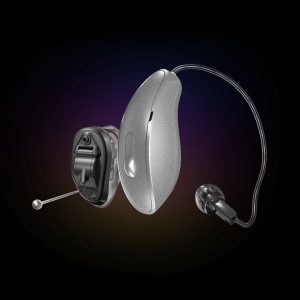
- Discreet styles including invisible-in-canal (IIC) and completely-in-canal (CIC) options
- Telecoil (T-coil) capability for use in loop-equipped venues like theaters and houses of worship
- Remote fine-tuning from your provider/telehealth adjustments without an in-person visit
Want to explore our current lineup of highly recommended hearing aids?
Who Benefits Most from Professionally Fit Hearing Aids?
Professionally fit hearing aids are the right choice for people who:
- Have moderate-to-severe, severe, or profound hearing loss
- Have tried OTC or self-fit hearing aids and not gotten adequate results
- Have hearing loss that varies significantly across frequencies
- Have structural issues in the ear or auditory nerve that need professional assessment
- Spend significant time in complex listening environments (work meetings, restaurants, events)
- Want the most precise, customized solution available
- Value ongoing professional support and follow-up care
If you’re not sure whether OTC or professionally fit is right for you, a hearing evaluation is the clearest way to find out. It takes the guesswork out of the decision entirely.
The Cost Question: Is the Investment Worth It?
Professionally fit hearing aids cost more than OTC devices, there’s no getting around that. Prescription hearing aids typically range from $2,000 to $7,000 or more per pair, compared to $200–$1,500 for OTC options. That price includes not just the hardware but the evaluation, fitting, programming, real-ear measurement, and follow-up care.
For people whose hearing loss falls in the mild-to-moderate range, a quality OTC hearing aid may genuinely be all they need and we’d tell you that honestly. But for people with more significant or complex hearing needs, choosing a lower-cost OTC device that doesn’t adequately address their loss isn’t a savings it’s a delay in getting real help. And the research on untreated hearing loss is clear: the longer it goes unaddressed, the greater the impact on cognitive health, social connection, and quality of life.
Our team can help you understand your options, including any financial assistance programs, insurance coverage, or financing that may apply.
OTC or Professionally Fit: Making the Right Decision for Your Hearing
There’s no single right answer here, only the right answer for you. Here’s a simple way to think about it:
- Start with OTC if: you have mild to moderate hearing loss, you’re cost-conscious and want to try something accessible first, and you’re comfortable with self-adjustment. Read our self-fit hearing aids guide for where to begin.
- Choose professionally fit if: your hearing loss is more than mild-to-moderate, you’ve had limited success with OTC devices, you want the most accurate and customized fit possible, or you value ongoing professional support. If you are local to Minnesota, you can visit us at our Hopkins clinic!
- Not sure which applies to you? Schedule a hearing evaluation. It’s the single most useful thing you can do, it gives you real data about your hearing instead of guesswork, and our team can walk you through every option that makes sense for your profile.
Whatever path you choose, taking action is what matters most. Hearing health is an investment in how you experience the world, conversations you’re part of, the sounds you notice, the connections you keep. We’re here to help you find the right way forward.
Explore your options at Hears Hearing & Hearables — in our online store or with our team directly.
Frequently Asked Questions About Professionally Fit Hearing Aids
What is a professionally fit hearing aid?
A professionally fit hearing aid is a prescription-level device programmed by a licensed audiologist or hearing care professional based on a comprehensive hearing evaluation. It is customized to your individual hearing profile and comes with follow-up care and adjustments.
How is professionally fit different from OTC hearing aids?
OTC hearing aids are self-adjusted and designed for mild to moderate hearing loss. Professionally fit hearing aids are custom-programmed to your exact audiogram, include advanced technology, and come with ongoing professional support to make them better suited for more complex or significant hearing loss.
Do I need a prescription for a professionally fit hearing aid?
Yes. Professionally fit hearing aids require a comprehensive hearing evaluation by a licensed hearing healthcare professional before purchase and fitting.
What is real-ear measurement in hearing aid fitting?
Real-ear measurement is a best-practice verification step where a small microphone placed in the ear canal measures how sound is actually being delivered to your eardrum. Therefore ensuring the hearing aid’s output precisely matches what your audiogram requires.
How much do professionally fit hearing aids cost?
Professionally fit hearing aids typically range from $2,000 to $7,000 or more per pair. This price includes the device, hearing evaluation, fitting, programming, and follow-up care. Financial assistance programs as well as financing options may be available, ask your provider.