OTC Hearing Aids at Our Hopkins, MN Audiology Clinic, and Why We Offer Them When Others Don’t
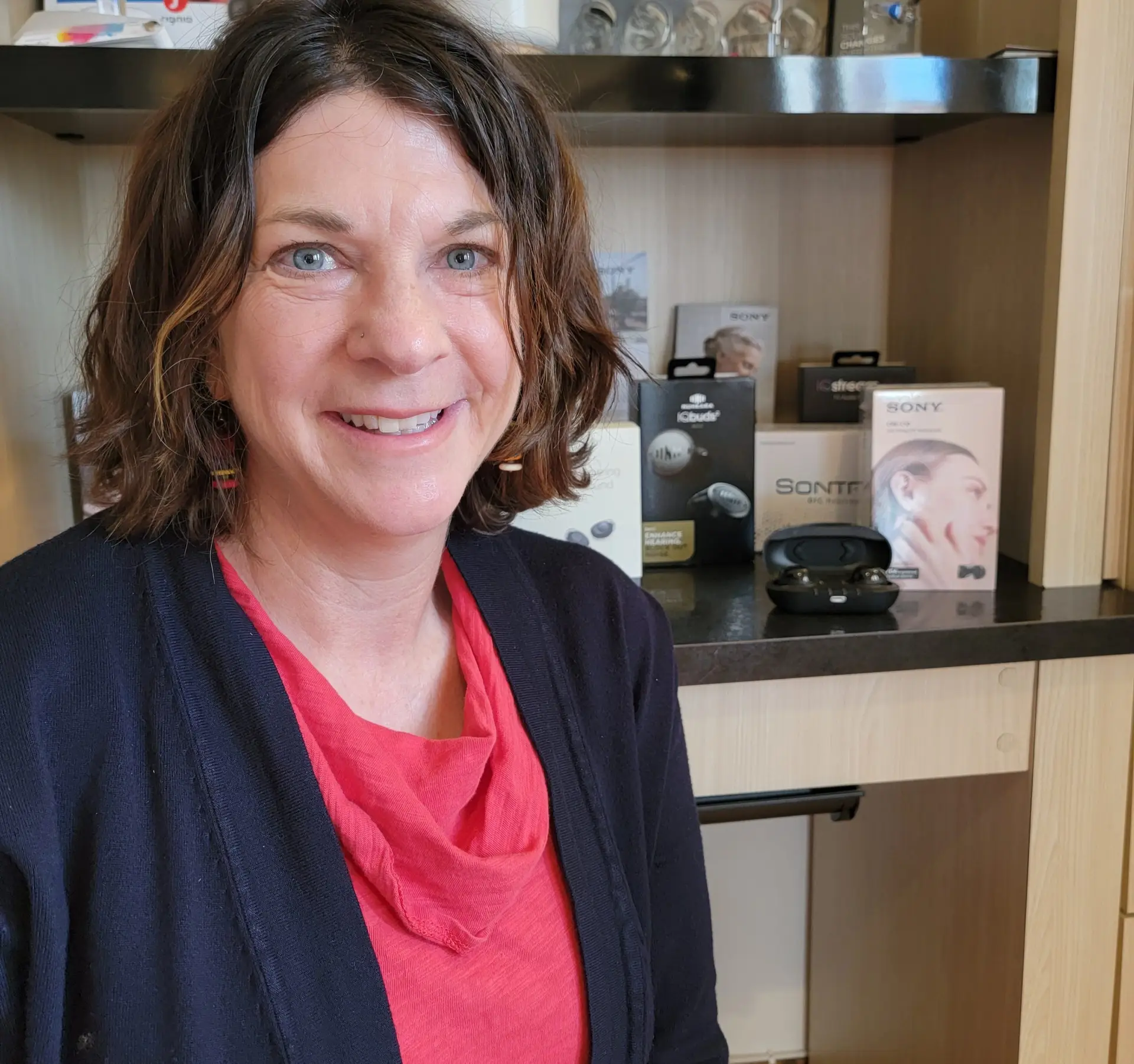
By Kim Fishman, Audiologist | Hears Hearing & Hearables & Hears to U, Hopkins, Minnesota
Not all audiologists offer over the counter hearing aids. In fact, many in my profession are skeptical of them, concerned about self-diagnosis, limited customization, and whether patients will get adequate results without professional fitting. Those are legitimate concerns, and I share some of them.
But I also believe that hearing care should meet people where they are financially, practically, and in terms of what they actually need. And for some patients, a well-chosen OTC hearing aid, set up with professional guidance, is genuinely the right answer. Not a compromise. The right answer.
Let me tell you about Anne.
Anne’s Story: How We Found a $1,000 Solution After a $6,000 Quote
“Anne had a hearing test that revealed a steep high-frequency hearing loss beyond 4000 Hz, a range where even professionally fit hearing aids often struggle. She’d been quoted $6,000 for a prescription pair elsewhere. She came to us looking for another option.”
Anne came to our Hopkins clinic after visiting another audiology practice that recommended a $6,000 pair of prescription hearing aids. That’s not an unreasonable price for high-end prescription devices, however, Anne’s situation made us pause before assuming that was the right solution.
Her hearing test showed a steep drop-off in hearing above 4000 Hz, a pattern called sloping high frequency hearing loss. Here’s what made her case interesting: even premium prescription hearing aids have physical limitations at the highest frequencies. The receivers in most hearing aids don’t extend into that range as effectively as the marketing might suggest. For Anne’s specific profile, a sophisticated prescription device was likely to deliver marginal real-world benefit over a well-chosen OTC option at a fraction of the cost.
She also told us something important about her life: she didn’t need hearing help all day, every day. She wanted to hear better in specific situations, particularly in noisy restaurants with friends and family. That’s a very different need from someone who struggles across all listening environments from morning to night.
What We Did Differently
We sat down with Anne and asked her what she actually wanted. Not what her audiogram said. Not what the most expensive option was. What she wanted the solution to look like, feel like, and cost.
She was clear: she wanted something discreet, something she could manage herself with some initial guidance, and something that wouldn’t require a $6,000 commitment for challenges she only encountered occasionally.
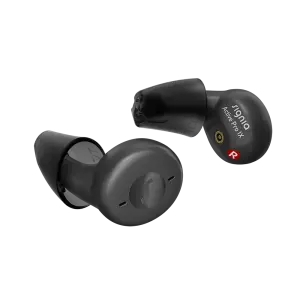
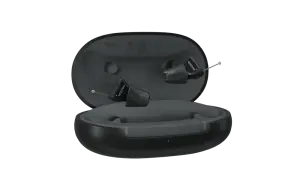
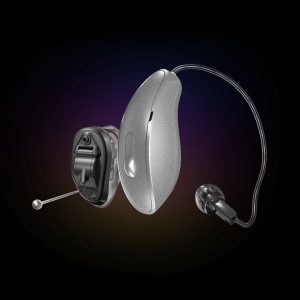
We determined that a completely-in-canal (CIC) OTC hearing aid was the right fit. CIC devices sit entirely within the ear canal, nearly invisible, discreet enough that most people won’t notice them, and well-suited to the in-restaurant, social-listening situations Anne described as her primary challenge.
At the time, Anne chose a Sony CRE-C10, a completely-in-canal device built on the WS Audiology / Signia hearing aid platform. That specific model is no longer available. Today, we’d point Anne toward the Rexton INOX 40, which is built on the same WS Audiology platform, maintains the same discreet CIC form factor, and now offers the benefit of professional fitting rather than OTC self-fitting, which actually gives her even better precision than the original Sony OTC.
PRODUCT UPDATE: The Sony CRE-C10 Anne originally chose is no longer available. The current equivalent we recommend for patients with Anne’s profile, the high-frequency loss, preference for discreet CIC design, occasional-use scenarios is the Rexton INOX 40. Built on the same WS Audiology / Signia platform as the original Sony OTC, it provides the same sound quality foundation with the added benefit of professional fitting.
What Our Clinic Visit Looked Like
Anne was comfortable with smartphone apps and owned an iPhone, but she didn’t want to navigate the setup alone. That’s a very common feeling with first-time hearing aid users, and it’s exactly the kind of thing our team is here for.
We charged a small professional service fee for the setup assistance. Here’s what that included:
- Otoscopic examination: we looked in Anne’s ears to check for wax, fit considerations, and canal shape before selecting dome size
- Dome fitting: we helped her select the right dome size for her ear canal, which directly affects both comfort and sound quality
- Device setup: we walked through the app setup with her on her iPhone, configuring her hearing profile and initial settings
- Cleaning and maintenance instruction: we showed her how to change domes and clean the device
- Sound check: she wore the devices and we confirmed the sound quality felt right for her before she left
The whole process was straightforward. Anne liked both the sound and the fit. The total cost, device plus our service assistance, came to approximately $1,000. For occasional-use hearing help in the specific environments that mattered to her, that was the right investment.
How It Worked Out
Anne left with a discreet, comfortable hearing solution tailored to her specific needs and lifestyle, for about one-sixth the cost of what she’d been quoted elsewhere. She knew how to use it, how to maintain it, and who to call if she needed help.
That’s what hearing care at an independent audiology practice can look like when we start with the patient’s actual needs rather than the most premium product in the catalog.
Why We Offer OTC Hearing Aids When Many Audiologists Don’t
I want to be direct about this: OTC hearing aids are not right for everyone. They are designed for adults with mild to moderate hearing loss who are comfortable managing some of the setup themselves. They don’t address severe or profound hearing loss, they typically offer less customization than prescription devices, and they don’t come with the ongoing professional support that a full audiology relationship provides.
But for the right patient, someone with mild to moderate loss, who has specific situational needs rather than all-day requirements, and who needs a more accessible price point, OTC hearing aids can be genuinely effective. Dismissing them entirely does those patients a disservice.
We think of OTC hearing aids the way many people think of reading glasses. You don’t need an ophthalmologist to buy reading glasses from a drugstore. They work well for a lot of people with mild presbyopia. But if your vision challenges are more complex, you need a prescription. Hearing aids work similarly, and knowing which tier is appropriate requires the kind of clinical judgment we provide.
How OTC Hearing Aids Work at Hears Hearing & Hearables
When you come to our Hopkins clinic, or connect with us through our telehealth service, here’s what the OTC hearing aid process looks like:
Step 1: Hearing Assessment
We start by understanding your hearing. This may mean reviewing a recent audiogram, conducting our Hearing Handicap Screening Test, or discussing your specific listening challenges. OTC hearing aids are appropriate for mild to moderate hearing loss, and we want to confirm that’s where you fall before recommending one. If your needs are more complex, we’ll tell you that honestly.
Step 2: Matching Device to Lifestyle
We don’t have a single OTC hearing aid we push on everyone. We ask about your lifestyle, when and where do you struggle most? Do you need something for all-day wear or specific situations? Do you want Bluetooth for streaming? Is discretion your priority? These answers drive the recommendation.
Step 3: Purchase — In Our Store or Online
All the OTC hearing aids we carry have been clinic-tested by our team before we added them to our store. You can purchase directly from us, in Hopkins or through our online store, knowing that we’ve evaluated what we’re recommending.
Step 4: Setup Assistance (Optional but Recommended)
OTC hearing aids are designed for self-setup, but we offer professional setup assistance for a small service fee, just as we did with Anne. This includes otoscopic examination, dome fitting, app-guided configuration, and maintenance instruction. First-time hearing aid users almost always benefit from this step. It reduces frustration, improves initial performance, and means you leave our clinic actually hearing better, not guessing at settings at home.
Step 5: Ongoing Support
We don’t disappear after the sale. If something isn’t working, the fit is uncomfortable, the settings don’t feel right, or you’re not getting the benefit you expected, reach out. We’re here to help you troubleshoot, and we can connect you via telehealth if an in-person visit isn’t convenient. If we determine your needs require a prescription device, we’ll make that recommendation honestly.
Is an OTC Hearing Aid Right for You? Questions to Ask Yourself
Anne’s case had specific characteristics that made OTC the right call. Here’s how to think about whether it might be right for you:
- Do you have mild to moderate hearing loss? OTC hearing aids are designed for this range. If your loss is more significant, prescription devices are the appropriate path.
- Are your hearing challenges situational rather than constant? If you primarily struggle in specific environments like restaurants, large gatherings, TV rather than all-day in all environments, an OTC solution may be well-suited to your actual needs.
- Is cost a significant factor in your decision? OTC hearing aids typically range from $200 to $1,500 per pair. Prescription devices typically run $2,000 to $7,000+. If budget is a genuine constraint, OTC is worth evaluating seriously.
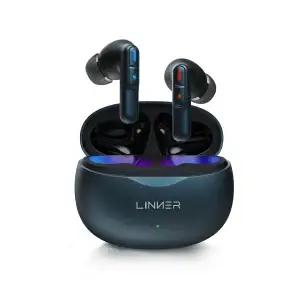
- Are you comfortable using a smartphone app? Most OTC hearing aids are set up and adjusted through a companion app. If you’re not comfortable with this, either choose a simpler push-button model (like the LINNER Mercury) or plan to use our setup assistance service.
- Have you been quoted a very high price for prescription hearing aids? If you’ve received a recommendation that feels financially out of reach, come talk to us before giving up. Anne’s story isn’t unusual, and a second opinion from a clinic that offers the full range of options often reveals possibilities that weren’t presented the first time.
Not sure? Take our free Hearing Handicap Screening Test. It takes just a few minutes and gives us useful information to guide the conversation.
Why Choose Hears Hearing & Hearables for OTC Hearing Aids in Hopkins, MN
There are plenty of places to buy OTC hearing aids, Amazon, Best Buy, CVS, and dozens of online retailers. What you can’t get from any of them is what Anne got from us: a clinical ear examination, professional dome fitting, one-on-one device setup with an audiologist’s team, and ongoing support from people who understand hearing, not just products.
We’re a small, independent audiology practice in Hopkins, Minnesota. We offer OTC hearing aids not because they’re profitable to push, they’re considerably less profitable than prescription devices, but because they’re the right answer for some of our patients. That clinical integrity is what we’re built on.
- Clinic-tested products — we carry what we’ve evaluated, not everything on the market
- Professional setup assistance available— small service fee, big difference in outcomes
- Telehealth support –for patients who can’t easily visit us in person
- Honest guidance — if OTC isn’t right for your needs, we’ll tell you
- Return support — all our products come with return windows; we’ll help you navigate the process if needed
Ready to Explore OTC Hearing Aids? We’re Here.
Whether you’re in Hopkins, somewhere else in Minnesota, or connecting with us remotely through our telehealth service, we’re happy to talk through your hearing situation and figure out what makes sense for you.
You can start by taking our free Hearing Handicap Screening Test, browsing our OTC hearing aid selection, or reaching out directly to our team. There’s no obligation, just a conversation with people who genuinely want to help you hear better.
Cheers to better hearing.
— Kim Fishman, Audiologist | Hears Hearing & Hearables & Hears to U, Hopkins, Minnesota