
Unitron Smile Hearing Aids Review: Moxi Smile S-R, Integra OS, and the Flex Advantage
Unitron launched the Smile platform in May 2025 as their current flagship hearing aid, built on the ERA chip, the same core processor used in the Phonak Audeo Infinio. If you are shopping for a Sonova-platform hearing aid but want the flexibility of Unitron’s distinctive Flex trial and upgrade programs, Smile is the one to know.
This review covers what the Smile platform actually offers, how it compares to its Phonak sibling, what the technology levels mean in practice, and who benefits most from Unitron’s unique approach to the buying experience.
The ERA Chip: What It Means That Smile Shares a Platform With Phonak Infinio
Unitron and Phonak are both owned by Sonova Group. The ERA chip at the heart of Unitron Smile is the same core processor used in the Phonak Audeo Infinio. This shared platform has real practical implications:
- Similar core sound processing: Integra OS (Unitron’s sound management system) and AutoSense OS 7.0 (Phonak’s system) both run on the same ERA chip with similar foundational processing capabilities.
- Comparable Bluetooth: both support universal Bluetooth connectivity for iPhone and Android, hands-free calls, and direct streaming.
- Similar charger ecosystem: Unitron Smile and Phonak Infinio use equivalent charger platforms.
- No DEEPSONIC chip: this is the key distinction. Phonak Infinio Sphere adds a dedicated DEEPSONIC AI chip for advanced speech in noise processing. Unitron Smile does not have an equivalent, it is on the ERA chip alone, the same as Phonak Infinio standard (non-Sphere).
Think of Unitron Smile as the Phonak Infinio equivalent without the Sphere’s DEEPSONIC chip, with Unitron’s own sound processing approach, and with the Flex trial and upgrade programs as a distinctive advantage. For patients whose environments do not demand the most extreme noise processing, this is a genuinely strong option.
Integra OS: How Smile Processes Sound
Integra OS is Unitron’s sound management system, using machine learning to analyze and respond to different listening environments in real time. The system identifies up to eight distinct listening situations and adjusts automatically, reducing the need for manual program switching throughout the day.
HyperFocus
Brings voices into clearer focus when background noise is present. Works by directing microphone sensitivity toward the primary speech source while reducing competing sounds. Available at higher technology levels.
Soft Speech Lift
Enhances softer voices, such as a quiet speaker across a table or a child’s voice, without over-amplifying surrounding sounds. Addresses one of the most common complaints from hearing aid users: hearing aids that make loud sounds louder but do not help with soft speech clarity.
AutoFocus 360
Available at higher technology levels. Detects the direction of speech and works with binaural microphones (both hearing aids coordinating) to provide a clearer, more natural experience regardless of where the speaker is positioned. Reduces the need to physically orient toward whoever is speaking.
Hardware and Reliability: What 1,000 Hours of Testing Means
Unitron placed significant emphasis on durability with the Smile platform. Rather than mentioning reliability as a marketing point, they backed it with documented testing:
- IP68 water and dust resistance: submersible up to 1.5 meters for 30 minutes
- Parylene coating: protects internal components from moisture, corrosion, and dust at the circuit board level
- Redesigned housing: reinforced shell structure with sealed rechargeable battery system
- Over 1,000 hours of environmental and mechanical stress testing: including drop tests, corrosion tests, and battery cycling
For hearing aid users who work outdoors, exercise regularly, or live in humid climates, this level of documented durability testing is meaningful. Most hearing aid manufacturers cite IP ratings without publishing specific stress testing protocols.
Moxi Smile S-R: Specifications
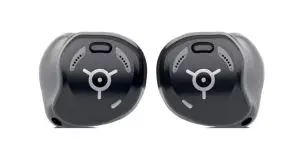
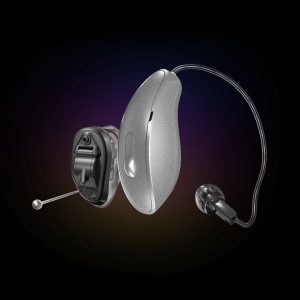
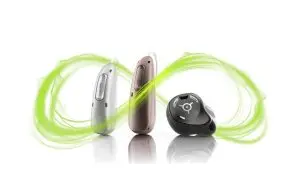
The Moxi Smile S-R is the first hearing aid on the Smile platform, a rechargeable receiver-in-canal (RIC) model available in four technology levels:
|
Feature |
Level 9 |
Level 7 |
Level 5 |
Level 3 |
|
Integra OS |
Full |
Full |
Standard |
Essential |
|
AutoFocus 360 |
✅ |
✅ |
Limited |
❌ |
|
HyperFocus |
✅ |
✅ |
✅ |
❌ |
|
Soft Speech Lift |
✅ |
✅ |
✅ |
❌ |
|
Battery life |
Up to 24 hrs |
Up to 24 hrs |
Up to 24 hrs |
Up to 24 hrs |
|
Bluetooth |
Universal |
Universal |
Universal |
Universal |
|
Water resistance |
IP68 |
IP68 |
IP68 |
IP68 |
|
Remote Plus app |
✅ |
✅ |
✅ |
✅ |
|
Flex trial / upgrade |
✅ |
✅ |
✅ |
✅ |
The Flex Program: Unitron’s Most Distinctive Advantage
If you have never heard of Unitron’s Flex program, this section is worth reading carefully. It is the single most distinctive thing about buying Unitron rather than Phonak, and it has no equivalent from any other major manufacturer.
Flex Trial
Flex trial lets you try different technology levels before committing to a purchase. Rather than choosing a level based on a clinic demo and a sales conversation, you wear the hearing aids in your actual life — at work, in restaurants, at family gatherings, wherever you actually struggle, at one technology level, then potentially at another, before deciding which level you want to buy.
For a first-time buyer who is uncertain whether the investment in a premium level is worth it for their specific lifestyle, this removes a significant source of anxiety from the purchase decision.
Flex Upgrade
Flex upgrade lets you upgrade to a higher technology level after purchase without buying new hardware. The same physical hearing aids, upgraded via software to a higher technology tier, at a cost difference rather than full replacement cost.
This is meaningful for patients who buy at a lower level initially for budget reasons and later want more. It is also meaningful for patients whose listening needs change over time, such as someone who retires and suddenly finds themselves in more social situations than they expected.
Log It All
Smile’s data logging feature records the listening environments you actually encounter in daily life and for how long. This data helps your audiologist make programming decisions based on your real-world listening patterns rather than assumptions. It is particularly useful during the Flex trial period.
Unitron Smile vs Phonak Infinio: Honest Comparison
Since both are on the ERA chip platform, this is a genuine side-by-side comparison rather than an apples-to-oranges one. The differences come down to priorities:
|
|
Unitron Smile |
Phonak Audeo Infinio |
|
Core chip |
ERA chip |
ERA chip |
|
Sound OS |
Integra OS |
AutoSense OS 7.0 |
|
DEEPSONIC AI chip |
Not available |
Available on Sphere only |
|
Flex trial / upgrade |
✅ Unique to Unitron |
Not available |
|
Universal (MFi + ASHA) |
Universal (SWORD 3.0 Classic) |
|
|
ERA platform roadmap |
Hardware capable, not yet activated |
|
|
Price |
Generally lower than Phonak Infinio |
Premium pricing |
|
Best for |
Value buyers, first-timers, those who want upgrade flexibility |
Broader feature set, SWORD connectivity advantage |
Who Unitron Smile Is Right For
- First-time hearing aid buyers: the Flex trial removes the guesswork from choosing a technology level. Being able to experience different levels in your own life before committing is genuinely valuable for someone who has never worn hearing aids and does not know what to expect.
- Budget-conscious buyers who want upgrade flexibility: starting at a lower Smile technology level with the option to upgrade later is a more accessible entry point than committing to a premium device upfront.
- Patients who want Sonova platform quality at lower cost than Phonak: Smile and Phonak Infinio share the ERA chip. If the DEEPSONIC chip in Phonak Sphere is not a priority for your listening profile, Smile offers comparable core processing at a lower price point.
- Patients whose hearing needs are likely to change: Flex upgrade protects the investment. Buying Smile at Level 5 and upgrading to Level 9 later costs less than replacing devices entirely.
If your primary challenge is extreme speech in noise, such as consistently difficult restaurant and party environments, comparing Unitron Smile against Phonak Infinio Sphere’s DEEPSONIC chip is worth doing before you decide. Our team can help you think through which platform fits your specific audiogram and lifestyle.
Ready to Explore Unitron Smile?
We carry the Unitron Moxi Smile S-R at Hears Hearing and Hearables. All prescription Unitron devices require a current audiogram for programming. Ask us about the Flex trial program, we think it is one of the most genuinely patient-friendly features in the prescription hearing aid market.
Shop Unitron Smile, compare with Phonak, or contact our team for a personalized recommendation.
Frequently Asked Questions: Unitron Smile Hearing Aids
What is the Unitron Smile hearing aid?
Unitron Smile is Unitron’s current flagship hearing aid platform, launched May 2025. It is built on the ERA chip — the same core processor as the Phonak Audeo Infinio — and uses Integra OS for sound management. The first device on the platform is the Moxi Smile S-R, a rechargeable receiver-in-canal hearing aid available in four technology levels (9, 7, 5, and 3). Key features include HyperFocus, Soft Speech Lift, AutoFocus 360, IP68 water resistance, and Unitron’s Flex trial and upgrade programs.
Is Unitron Smile the same as Phonak Infinio?
They share the same ERA chip platform but are distinct products with different sound processing systems. Unitron Smile uses Integra OS; Phonak Infinio uses AutoSense OS 7.0. Phonak Infinio Sphere adds the DEEPSONIC dedicated AI chip for advanced speech in noise processing, which Unitron Smile does not have. Unitron Smile has the Flex trial and upgrade programs, which Phonak does not offer. For a full comparison, see our Unitron vs Phonak guide. [LINK to Unitron vs Phonak comparison]
What is the Unitron Flex trial?
Unitron’s Flex trial program lets you experience different technology levels of hearing aids in your own real-life environments before committing to a purchase. Rather than choosing a technology level based on a clinic demonstration alone, you wear the hearing aids through your actual daily situations — at work, in restaurants, with family — at one or more technology levels before deciding which level to buy. It is one of the most genuinely patient-centered features in the prescription hearing aid market.
What is the Unitron Flex upgrade?
Flex upgrade lets you upgrade your Unitron Smile hearing aids to a higher technology level after purchase without buying new hardware. The same physical devices are upgraded via software to a higher processing tier, at a cost difference rather than full replacement. This protects your initial investment and gives you flexibility if your listening needs change or if you want to try a higher level after living with your devices for a while.
How does Unitron Smile compare to Unitron Vivante?
Unitron Vivante (formerly Moxi V-R and V-RT) is the previous generation, built on the Lumity platform equivalent. Smile is the current flagship on the new ERA chip platform. Smile brings updated processing through Integra OS, improved hardware reliability with over 1,000 hours of stress testing, and the new AutoFocus 360 directionality feature. Vivante remains available at a lower price point for buyers who do not need the latest platform.
What charger does Unitron Smile use?
Unitron Smile uses a new magnetic charger system specific to the Smile platform. Two options are available: a standard desktop charger and the portable ChargerGo for on-the-go charging. The Smile charger is not the same as the Unitron Vivante (Phonak Charger Ease equivalent) charger. For a full Sonova-platform charger compatibility reference, see our charger guide. [LINK to Sonova charger guide]